|
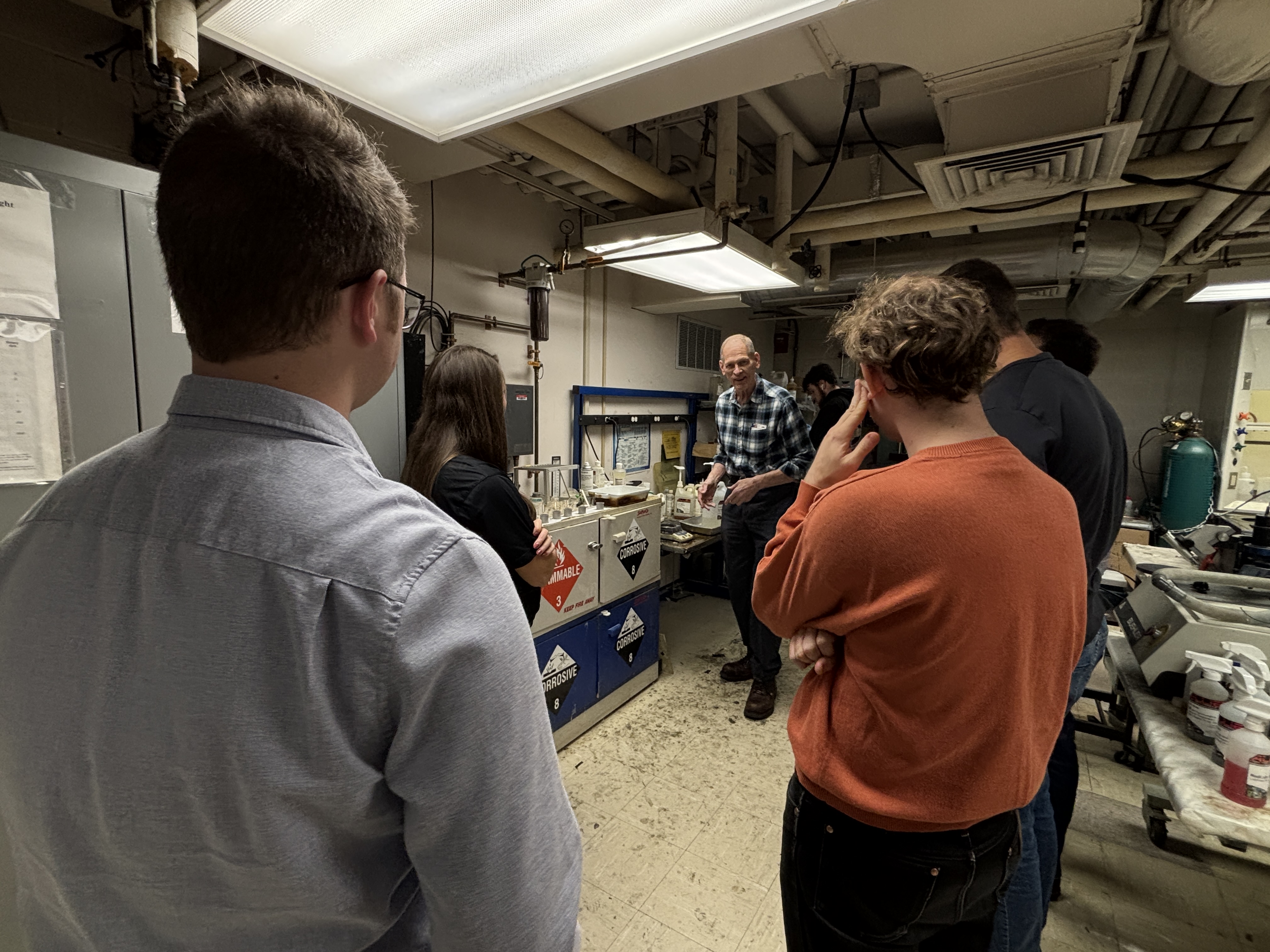
College Park, MD - On November 18-21, 2025, CALCE hosted its highly anticipated annual four-day short course on root cause failure analysis of electronics. This limited-enrollment course attracted professionals from prominent organizations in the aerospace, defense, and technology sectors from the U.S. and several other countries. The course provided participants with interactive classroom lectures and hands-on training in understanding and resolving failures in electronic products.
Dr. Michael Azarian led the course with support from Dr. Michael Osterman and Dr. Robert Utter. CALCE graduate students Sahithi Maddipatla, Soma Roy, Devon Richman, Aniket Bharamgonda, Rachel McAfee, and Pranav Srinivasan led laboratory demonstrations of various test methods and characterization equipment.
Through a blend of classroom lectures, case study group sessions, live demonstrations, and practical laboratory training, attendees gained valuable insights into the latest methods for failure analysis. The lectures covered root cause analysis methodology, physics of failure-based reliability analysis, failure mechanisms in electronics, and materials analysis techniques. Some of the special topics covered included intermittent failures, time-domain reflectometry, and the applications of AI/machine learning to diagnosing failures in electronic circuits. With a history of being presented to hundreds of attendees over seventeen years, this course stands out as the premier comprehensive short course on failure analysis of electronics for working professionals.
Participants were introduced to the Closed Loop Root Cause Analysis methodology, which helped them understand the structured process of identifying and resolving failure causes through systematic investigation. Some of the non-destructive techniques covered were Optical Microscopy, X-ray Imaging, Acoustic Microscopy, and even Quantum Diamond Microscopy. Participants were introduced to Scanning Electron Microscopy (SEM) and associated elemental analysis techniques to analyze failures at the microscopic level. Participants engaged in hands-on training with cross-sectional sample preparation. Laboratory demonstrations were conducted on techniques such as X-ray Fluorescence Spectroscopy, Thermo-Mechanical Analysis (TMA), Nanoindentation, Fourier Transform Infrared Spectroscopy (FTIR), and advanced tools like Focused Ion Beam (FIB) Etching and Transmission Electron Microscopy (TEM).
For more information about future offerings of this course, contact Dr. Michael Osterman.
Learn more about CALCE equipment and professional development courses.
November 20, 2025
|